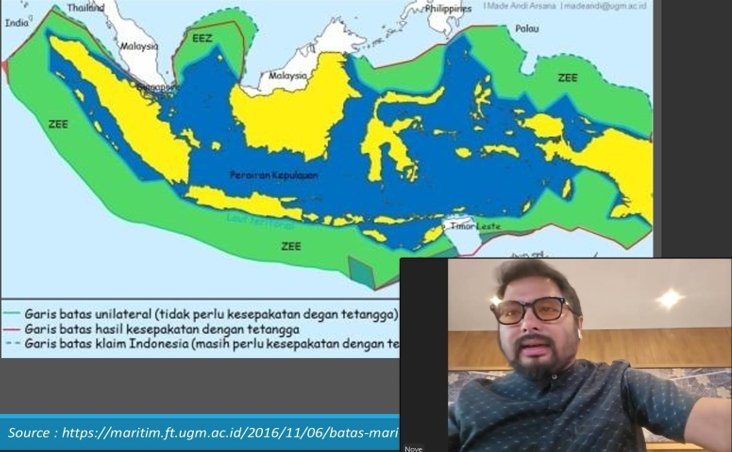
AMO WEBINAR

ANALYSIS OF THE REGULATION OF THE MINISTER OF INVESTMENT AND DOWNSTREAMING/HEAD OF THE INVESTMENT COORDINATING BOARD NUMBER 5 OF 2025

ANALISIS PERATURAN MENTERI INVESTASI DAN HILIRISASI/ KEPALA BADAN KOORDINASI PENANAMAN MODAL NOMOR 5 TAHUN 2025 ANALYSIS OF THE REGULATION OF THE MINISTER OF INVESTMENT AND DOWNSTREAMING/HEAD OF THE INVESTMENT COORDINATING BOARD NUMBER 5 OF 2025   Contributors        :    Pramudya Yudhatama, S.H., C.L.A., Anis Sambuaga Telaumbanua, S.H., And Ryan Mahadi Christian, S.H. Reviewer               :    Noverizky Tri Putra Pasaribu, S.H., LL.M. (Adv.)   File : Newsletter Perka BKPM 5 Tahun 2025.byAMO.21.10.2025 (Bilingual)

ANALYSIS OF THE REGULATION OF THE MINISTER OF INVESTMENT AND DOWNSTREAMING/HEAD OF THE INVESTMENT COORDINATING BOARD NUMBER 5 OF 2025 Read More »

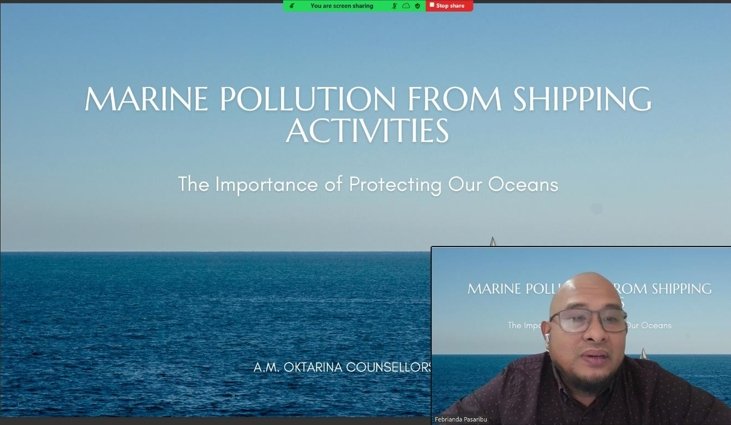
Participation in ET-Asia Webinar on Marine Pollution from Shipping Activities: IMO Regulations, Prevention and Response, and the Protection of Biodiversity

AM Oktarina Counsellors at Law’s Participation in ET-Asia Webinar on Marine Pollution from Shipping Activities: IMO Regulations, Prevention and Response, and the Protection of Biodiversity Contributors   :    Pramudya Yudhatama, S.H., C.L.A., Hana Khairunisa, S.H., and Ryan Mahadi Christian, S.H. Reviewer          :    Noverizky Tri Putra Pasaribu, S.H., LL.M. (Adv.) Febrianda Pasaribu, M.Sc   On Wednesday, September 24th, 2025, AM Oktarina Counsellors at Law (“AMO”) took part in the ET-Asia Webinar “Marine Pollution from Shipping Activities the Importance of Protecting Our Oceans.” The discussion placed emphasis on Indonesia’s evolving legal framework, particularly its efforts to reinforce maritime sovereignty while advancing pollution managing rules in the shipping sector. Representing AMO, Mr. Febrianda Pasaribu, M.Sc., Managing Partner, shared his expertise on the broader implications of these reforms for stakeholders in the maritime and logistics industries. With a strong academic foundation from Erasmus University and a rich professional experience in maritime law and policy, Mr. Febrianda offered an in-depth analysis of how international conventions and domestic legislation converge to tackle the pressing challenges of marine pollution and the protection of biodiversity. Shipping always has been the backbone of global commerce for a long period of time, and for Indonesia, which is a vast archipelagic state with more than 17,000 islands—its importance cannot be overlooked. Nearly 90% of international trade relies on sea transport, and Indonesia sits strategically along some of the busiest shipping lanes in the world. Yet, as Mr. Febrianda emphasized in a recent presentation, this reliance on maritime activities comes with significant risks. Most notably risk among them is marine pollution caused by shipping operations, a challenge that threatens not only Indonesia’s environment but also its long term maritime competitiveness. Marine pollution from shipping manifests in many forms. Oil spills, whether caused by tanker accidents or illegal discharges remain one of the most visible and devastating threats, as illustrated by the 2018 oil spill in Balikpapan Bay. Beyond oil, ballast water discharged by ships introduces invasive species that disrupt local ecosystems, while exhaust emissions contribute to global problems such as air pollution and ocean acidification. Ships also generate solid and liquid waste, including sewage, plastics, and hazardous chemicals, while antifouling paints used to protect hulls often contain toxic substances like tributyltin. Mr. Febrianda noted that these pollutants are not isolated problems; rather, they represent a systemic risk that must be addressed through international cooperation, strong national regulation, and industry compliance. From a legal perspective, the framework for preventing marine pollution is extensive. International conventions such as the United Nations Convention on the Law of the Sea (“UNCLOS 1982”), the International Convention for the Prevention of Pollution from Ships (“MARPOL”), and the Ballast Water Management Convention 2004 create a robust set of obligations for states and ship operators. MARPOL, for example, addresses oil, harmful liquid substances, dangerous packaged goods, sewage, garbage, and air emissions through its six annexes. Its core principles, including the precautionary principle, the polluter pays principle, and the responsibilities of flag and port states remain foundational to global shipping regulation. Mr. Febrianda highlighted that these principles establish accountability across the shipping chain, ensuring that those who profit from maritime commerce also bear responsibility for its environmental consequences. Indonesia has formally embraced these global standards by ratifying key conventions, but it also maintains its own national legal instruments. Laws such as Law No. 17 of 2008 on Shipping, Law No. 32 of 2009 on Environmental Protection and Management (as amended), and most recently Law No. 66 of 2024, underline the country’s commitment to aligning domestic rules with international obligations. Complementary government regulations and ministerial decrees address issues ranging from waste discharge to port reception facilities. Together, these laws seek to prevent pollution, mandate emergency preparedness, and impose liability on shipowners for damages caused by their operations. Still, as Mr. Febrianda observed, enforcement remains uneven, and gaps in monitoring and compliance create vulnerabilities that undermine the effectiveness of even the most sophisticated regulatory structures. Central to the enforcement of maritime pollution rules are the dual mechanisms of Flag State Control (“FSC”) and Port State Control (“PSC”). Under FSC, the flag state—the country where a ship is registered—bears responsibility for ensuring compliance with MARPOL and other conventions. Ships cannot operate without the necessary pollution prevention certificates issued by their flag state. However, many operators register vessels under so called “flags of convenience,” often in jurisdictions with weak oversight, which limits FSC’s effectiveness. By contrast, PSC empowers port states like Indonesia to inspect foreign vessels visiting their harbours, verify compliance, and even detain ships found in violation. Indonesia participates in regional cooperation frameworks such as the Tokyo Memorandum of Understanding to strengthen PSC, a step that Mr. Febrianda praised as crucial for protecting Indonesia’s waters from non-compliant foreign vessels. Pollution prevention is only half the battle. Response mechanisms are equally critical. International frameworks such as the Oil Pollution Preparedness, Response, and Cooperation Convention (“OPRC 1990”) and the Civil Liability Convention (“CLC 1969”) establish requirements for oil spill emergency plans, international cooperation, and liability for compensation. Domestically, Indonesia has set out detailed procedures through ministerial regulations and coordination protocols involving agencies such as the Ministry of Transportation and the National Disaster Management Agency / Badan Nasional Penanggulangan Bencana (“BNPB”). These ensure that when spills or discharges occur, they are addressed swiftly and victims, including coastal communities and fishermen are entitled to compensation. According to Mr. Febrianda, effective response measures must balance responsibility, liability, and cooperation, ensuring that polluters are held accountable while also mobilizing collective resources for mitigation. Marine pollution does not only present regulatory challenges—it poses direct threats to biodiversity and marine life. Oil spills devastate coral reefs and mangrove forests, ballast water spreads alien species that outcompete native fish, plastics entangle turtles and seabirds, and chemical discharges affect plankton at the base of the food chain. Emissions such as sulphur oxides and nitrogen oxides accelerate ocean acidification, threatening the long term survival of coral ecosystems. As Mr. Febrianda underlined, these impacts are not abstract environmental issues; they carry profound economic consequences by undermining

Participation in ET-Asia Webinar on Marine Pollution from Shipping Activities: IMO Regulations, Prevention and Response, and the Protection of Biodiversity Read More »

at ET Asia Webinar: Collision and Salvage Operations

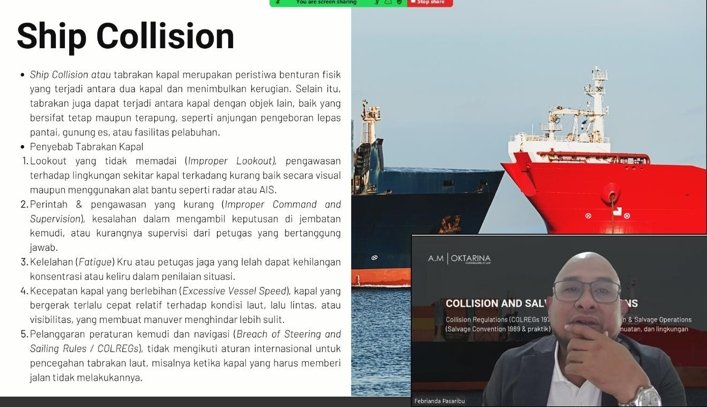
AM Oktarina Counsellors at Law at ET Asia Webinar: Collision and Salvage Operations Contributors   :    Pramudya    Yudhatama,    S.H.,    C.L.A.,    and    Anis                      Sambuaga Telaumbanua, S.H. Reviewer          :    Noverizky Tri Putra Pasaribu, S.H., LL.M. (Adv.) and Febrianda Pasaribu M.Sc.   On Tuesday 23th September 2025, the ET Asia Webinar once again hosted Mr. Febrianda Pasaribu M.Sc., Managing Partner of AM Oktarina Counsellors at Law (“AMO”), to speak on a subject that sits at the very heart of maritime safety Collision and Salvage Operations. His lecture was not delivered as a dry legal text but as a vivid narrative about risk, responsibility, and resilience on the seas. From the outset, Mr. Febrianda reminded the audience that the ocean functions as the world’s busiest highway. Around ninety percent of global goods are carried by ships. Every car manufactured, every barrel of oil transported, every ton of grain exported depends on maritime transport. Yet, this immense flow of goods brings with it an equally immense danger collisions between vessels, accidents that endanger lives and property, and incidents that threaten fragile marine ecosystems. To meet these risks, maritime law has long relied on two fundamental pillars of international regulation. The first is the International Regulations for Preventing Collisions at Sea, 1972   (“COLREGs”), often described as the traffic code of the oceans. The second is the International Salvage Convention of 1989, which governs not only the saving of ships and cargo but also the protection of the marine environment. Indonesia has fully integrated both instruments into its domestic legal framework, ensuring that its waters are regulated in accordance with international standards through the Shipping Law, government regulations, and ministerial decrees. Collisions are often imagined as rare, freak accidents unavoidable consequences of bad luck or natural forces. But as Mr. Febrianda emphasized, the truth is far more sobering most collisions are the product of human error. A ship colliding with another vessel, with a port structure, or with an offshore installation is usually the result of mistakes that could have been prevented. Perhaps a lookout was not maintained properly. Perhaps the master’s judgment was clouded by fatigue. Perhaps an officer failed to obey the rules of the road or a vessel proceeded at unsafe speed for the conditions. Whatever the cause, the consequences can be catastrophic loss of life, destruction of valuable property, and devastating oil spills that poison coastlines and ecosystems. Even the most technologically advanced navies and shipping companies are not immune. The 2017 collision between the USS Fitzgerald and a container ship near Japan served as a stark reminder. Despite sophisticated radar and advanced navigation systems, fatigue and failure to follow COLREGs led to tragedy. It underscored a timeless truth no technology can replace vigilance, discipline, and respect for the rules. The COLREGs, which Indonesia ratified in 1979, provide the unspoken order that governs movements at sea. They define responsibilities in crossing situations, head on encounters, overtaking maneuvers, and navigation in narrow straits. They require that every vessel keep a proper lookout at all times, adjusting speed to prevailing circumstances such as visibility, traffic density, and maneuverability. The rules demand early and decisive action to avoid collision. They establish a hierarchy of vessels, ensuring that those constrained by draft, engaged in fishing, or restricted in maneuverability are given priority over vessels that can more easily alter course. These rules form a shared language of predictability, preventing chaos in crowded waterways such as the Malacca Strait, Sunda Passage, and Lombok Strait, where hundreds of ships pass daily. As Mr. Febrianda noted, these rules are more than abstract regulations. They are lifelines. They transform the ocean from a lawless expanse into a highway governed by discipline and mutual respect. Without COLREGs, modern maritime traffic would collapse under its own density. Even with rules in place, collisions still occur. When they do, international and domestic law impose strict obligations on shipmasters. Under United Nations Convention on the Law of the Sea 1982 (“UNCLOS”) and Indonesian law, the master must render assistance to the other vessel if possible, broadcast distress signals, report the incident to the nearest harbour authority, and maintain precise documentation of events. Failure to meet these duties is not only a breach of maritime ethics but also a source of liability. In Indonesia, the Marine Court (Mahkamah Pelayaran) investigates collisions by examining radar logs, testimony, voyage data recorders, and witness statements. Its findings can result in suspension of licenses, disciplinary sanctions, and referrals to criminal prosecution. Civil liability is governed by the Indonesian Commercial Code/Kitab Undang-Undang Hukum Dagang (“KUHD”). If one vessel is at fault, it bears the full loss. If both are at fault, damages are apportioned according to responsibility. If fault cannot be determined, losses are shared equally. Importantly, even the presence of a compulsory pilot does not absolve shipowners of liability ultimate accountability rests with those who operate and profit from the vessel. This principle ensures that no one can hide behind technicalities when lives and livelihoods are at stake. Responsibility follows ownership, reinforcing the duty of care owed by every shipmaster and shipowner on the seas. If collisions represent the failure of prevention, salvage represents the hope of recovery. Salvage is defined in Indonesian law as assistance rendered to a ship in distress, whether afloat, stranded, or sunk. It includes the removal of wrecks and obstructions that threaten safe navigation. Crucially, salvage is not a free for all. Only licensed and permitted companies may carry it out, ensuring that operations are conducted with professionalism, accountability, and safety. The purpose of salvage goes far beyond saving property. It is about mitigating economic loss, protecting the environment, and ensuring navigational safety. Consider a stranded oil tanker leaking fuel without prompt and effective salvage, the incident could escalate into an environmental disaster. Salvage may involve patching hulls, pumping out seawater, offloading cargo, or towing vessels to safer waters. Salvage operations typically proceed step by step. First, teams assess stability, pollution risks, and weather conditions. Then, specialized assets tugboats, divers, cranes, pumps are deployed.

at ET Asia Webinar: Collision and Salvage Operations Read More »

Participation in ET-Asia Webinar on Carriage of Goods by Sea: Understanding Bills of Lading and Key International Rules

AM Oktarina Counsellors at Law’s Participation in ET-Asia Webinar on Carriage of Goods by Sea: Understanding Bills of Lading and Key International Rules Contributors   :    Pramudya Yudhatama, S.H., C.L.A., Khaifa Muna Noer Uh’dina, S.H., and Ryan Mahadi Christian, S.H. Reviewer          :    Noverizky Tri Putra Pasaribu, S.H., LL.M. (Adv.) Febrianda Pasaribu, M.Sc   On Monday, September 22th 2025, AM Oktarina Counsellors at Law (“AMO”) had the opportunity to contribute to the ET-Asia Webinar “Carriage of Goods by Sea: Understanding Bills of Lading and Key International Rules”. The webinar featured Mr. Noverizky Tri Putra Pasaribu, S.H., LL.M. (Adv.), Managing Partner of AMO, who delivered insights on the Carriage of Goods by Sea, a subject central to the dynamics of international maritime commerce. With his academic background from Leiden University and his recognized expertise in commercial and maritime law, Mr. Noverizky presented a thorough analysis of the contractual foundations, regulatory developments, and practical realities that define the carriage of goods by sea, both under global conventions and Indonesia’s domestic framework. Carriage of Goods by Sea, as understood under international law, refers to a contract for the transportation of goods by sea, evidenced by a Bill of Lading (“B/L”). This contract covers the period beginning when the goods come under the control of the carrier until their discharge at the port of destination. Within the Indonesian legal framework, the concept is similarly defined but regulated more specifically under the Indonesian Commercial Code / Kitab Undang- Undang Hukum Perdata (“KUHD”), Law No. 17 of 2008 on Shipping jo. Law No. 66 of 2024. Here, Carriage of Goods by Sea is characterized as an agreement in which the carrier undertakes the obligation to transport goods from the port of loading to the port of destination safely and in accordance with statutory requirements. The allocation of responsibilities in this contractual relationship rests on both the shipper and the carrier. The shipper is expected to deliver goods in a condition suitable for transport, tailored to their nature and characteristics. Equally, the shipper must provide complete and accurate information regarding the cargo, particularly in cases involving hazardous or specialized goods, and ensure that the goods are packaged securely to prevent damage during the voyage. The shipper also carries the obligation to pay freight charges as agreed in the contract of carriage and to comply with all applicable legal and regulatory requirements at both the national and international levels. At the heart of carriage of goods by sea lies the Bill of Lading / Konosemen (“Konosemen”), a document that has been universally recognized as central to maritime trade. As Mr. Noverizky explained, the Bill of Lading performs three principal functions. First, it acts as a receipt of goods, issued by the carrier to acknowledge the quantity and condition of cargo received. Second, it serves as evidence of the rights of the good’s owner, providing the legal ownership of the goods, so the right owner could divert the goods if needed. Third, and most distinctively, it functions as evidence of the contract of carriage, outlining the rights and obligations of both carrier and cargo owner. These functions underpin the B/L’s critical role in international trade, where documents often move faster than ships and facilitate commercial certainty across borders. In practice, various types of B/L exist, each suited to commercial arrangements. A straight bill of lading is non-transferable and consigns goods to a named consignee. An order bill of lading is negotiable and transferable by endorsement, making it particularly important in financing and trade transactions. A bearer bill of lading allows delivery to whoever presents the document, offering flexibility but also greater risk. Understanding the distinctions between these forms is essential, as they determine how ownership and risk in the goods can be transferred and enforced. The classification of Bills of Lading may also be viewed from several perspectives. Based on the status of the cargo, a Shipped Bill of Lading indicates that the goods have already been loaded on board and serves as strong evidence of shipment, while a Received for Shipment Bill of Lading shows that the goods have been received by the carrier but not yet loaded, functioning as proof of initial receipt. From the perspective of the condition of goods, a Clean Bill of Lading confirms that the goods were received in apparent good order and condition, and it is often required in transactions involving a Letter of Credit. Conversely, a Foul Bill of Lading includes notations that record damage or discrepancies in the cargo. Further, Bills of Lading are distinguished by their negotiability. A Straight Bill of Lading is issued to a specific consignee and is non-negotiable, while an Order Bill of Lading is negotiable and may be transferred by endorsement, making it especially valuable in international trade where goods are frequently bought and sold while in transit. A Bearer Bill of Lading, by contrast, may be transferred simply by delivery of the document itself, without the need for endorsement. Lastly, from the standpoint of the method of transport, a Through Bill of Lading covers carriage involving more than one vessel or mode of transport, a Multimodal or Combined Transport Bill of Lading extends coverage to carriage by sea together with other modes such as land or air, and a Charter Party Bill of Lading is issued in the context of a charter party agreement for the hire of a vessel. To regulate the responsibilities of carriers and the rights of cargo owners, the international community has established several conventions over the past century. The earliest and most influential are the Hague Rules of 1924, later updated through the Hague-Visby Rules of 1968, which impose minimum obligations on carriers. These rules require carriers to exercise due diligence to make vessels seaworthy, properly manned, and equipped, but they also allow significant exemptions from liability. As a result, the Hague and Hague-Visby frameworks have often been criticized for favoring carriers at the expense of cargo owners, though they remain widely adopted due to the legal certainty they provide.

Participation in ET-Asia Webinar on Carriage of Goods by Sea: Understanding Bills of Lading and Key International Rules Read More »

Participation in ET-Asia Webinar on Understanding Marine Insurance: Key Principles, Claims, and Subrogation

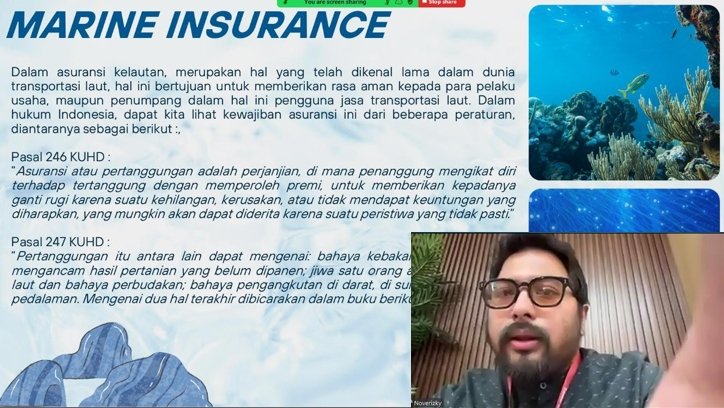
AM Oktarina Counsellors at Law’s Participation in ET-Asia Webinar on Understanding Marine Insurance: Key Principles, Claims, and Subrogation Contributors   :    Pramudya Yudhatama, S.H., C.L.A. and Ryan Mahadi Christian, S.H. Reviewer          :    Noverizky Tri Putra Pasaribu, S.H., LL.M. (Adv.) Febrianda Pasaribu, M.Sc   On Friday, September 19th, 2025, AM Oktarina Counsellors a t Law (“AMO”) had the honor of participating in the ET-Asia Webinar “Understanding Marine Insurance: Key Principles, Claims, and Subrogation.” The event explores Indonesia’s evolving maritime framework and its implications for industry stakeholders. A key focus of the session was the transformative provisions of Law No. 66 of 2024 on Shipping, which amends the landmark Shipping Law No. 17 of 2008. This legislation reflects Indonesia’s determination to reinforce maritime sovereignty while promoting efficiency, safety, and investment across the shipping sector. Representing AMO, Mr. Noverizky Tri Putra Pasaribu, S.H., LL.M. (Adv.), Managing Partner of the firm, delivered expert insights on the subject of marine insurance, highlighting its dual role as both a commercial safeguard and a statutory obligation in maritime operations. With academic training from Leiden University and recognition from leading international institutions, Mr. Noverizky has established himself as a trusted authority in commercial, corporate, and maritime law. Drawing on both transactional experience and policy perspectives, he provided a comprehensive analysis of marine insurance, focusing on its fundamental principles, the mechanics of claims, and the doctrine of subrogation, while also addressing the broader implications of Indonesia’s shipping reforms for stakeholders across the maritime and logistics ecosystem. One of the central themes highlighted during the webinar was the evolving role of marine insurance in Indonesia’s shipping industry. Historically, the Indonesian Commercial Code / Kitab Undang-Undang Hukum Dagang (“KUHD”) provided the earliest foundation for insurance regulation. Article 246 defines insurance as a contract under which the insurer, in exchange for premiums, promises to compensate the insured for loss, damage, or failure to obtain expected profits caused by uncertain events. Article 247 expands the scope of insurable risks to include fire, agriculture, maritime perils, life insurance, risks of slavery, and transportation by land, river, and inland waters. Over time, this framework has been broadened through more contemporary legislation. Law No. 4 of 2023, for instance, defines insurable interests expansively, encompassing not only goods and vessels but also human life, health, services, and liabilities. These developments demonstrate that insurance is increasingly understood not just as a financial safeguard but also as a comprehensive mechanism of risk management. In the maritime sector specifically, Law No. 17 of 2008 on Shipping introduced express insurance obligations. Article 54 requires transport operators to insure their liabilities, while Article 203 obliges shipowners to insure their vessels. Liability for marine pollution is further mandated, and this requirement is clarified in Law No. 66 of 2024, which introduces several new obligations, including the explicit requirement of wreck removal insurance. This must be undertaken through domestic insurers or foreign insurers operating via representative offices in Indonesia, with the added condition that foreign insurers must establish joint ventures with domestic companies. As emphasized by Mr. Noverizky during the session, this amendment reflects a deliberate policy choice by the government to strengthen national capacity in the marine insurance sector while maintaining channels for international collaboration. Marine insurance today thus plays a dual role: as a commercial instrument to mitigate risks and as a legal obligation embedded within Indonesia’s regulatory framework. Despite the strength of the legal architecture, however, practical challenges remain in its implementation. Compliance gaps are particularly evident among smaller operators, many of whom lack the financial capacity or regulatory awareness to meet mandatory insurance requirements. This creates systemic vulnerabilities that can undermine industry resilience. Claims handling also remains a persistent issue, with delays, disputes over coverage, and inconsistent documentation frustrating insured parties and weakening trust between insurers and clients. While the joint venture requirement under Law No. 66 of 2024 is intended to empower domestic insurers, it also raises short-term concerns, as local institutions may lack sufficient underwriting capacity to handle catastrophic, high-value claims. This creates a delicate balancing act: safeguarding national interests without compromising adequate coverage for stakeholders. Beyond the obligations imposed under the Shipping Law, the government has reinforced its approach through broader policy directives. Presidential Instruction No. 5 of 2025 underscores the state’s commitment to strengthening the resilience of the maritime insurance sector by mandating greater involvement of domestic insurers, encouraging collaboration with international partners, and expanding national capacity to manage complex maritime risks. These measures are designed not only to ensure national participation but also to build a competitive and credible insurance market aligned with Indonesia’s position as a global maritime hub. The principles of marine insurance also resonate with long-standing global legal traditions, particularly the Marine Insurance Act 1906. This seminal legislation has shaped global understanding of concepts such as insurable interest, utmost good faith, warranties, and indemnity. Although originating from the United Kingdom, the Act continues to serve as a reference point for global insurance practices, including those in Indonesia. Its doctrines, especially those on the duty of disclosure and indemnity, remain central to the interpretation and enforcement of marine insurance contracts, thereby bridging Indonesia’s domestic framework with international standards. To ensure uniformity and clarity in practice, Indonesia has also adopted standardized forms such as the Indonesian Standard Marine Cargo Insurance Policy / Polis Standar Asuransi Pengangkutan Barang Indonesia (“PSAPBI”) for cargo insurance and the Standard Indonesian Hull Form – 1.10.70 for vessel coverage. These standardized policies establish clear benchmarks for coverage, exclusions, and claims procedures, reducing ambiguity and minimizing disputes between insurers and insured parties. In practice, marine insurance in Indonesia now covers a wide range of risks beyond traditional Hull & Machinery and Protection & Indemnity coverage, extending to cargo insurance, freight insurance, liability coverage, and specialized forms such as war risk and pollution insurance. This breadth allows stakeholders to adopt comprehensive strategies that balance risk transfer with operational efficiency. Equally crucial are claims and subrogation mechanisms, which ensure the practical application of insurance contracts. The settlement of claims demands precision, transparency, and

Participation in ET-Asia Webinar on Understanding Marine Insurance: Key Principles, Claims, and Subrogation Read More »

ET Asia Webinar: Ship Registration, Ownership, Mortgages, and Maritime Liens

AM Oktarina Counsellors at Law at ET Asia Webinar: Ship Registration, Ownership, Mortgages, and Maritime Liens Contributors   :    Pramudya    Yudhatama,    S.H.,    C.L.A.,    and    Anis                      Sambuaga Telaumbanua, S.H. Reviewer          :    Noverizky Tri Putra Pasaribu, S.H., LL.M. (Adv.) and Febrianda Pasaribu M.Sc. On Friday 19th September 2025, the ET Asia Webinar welcomed participants from across the region to hear Mr. Febrianda Pasaribu M.Sc., Managing Partner at AM Oktarina Counsellors at Law (“AMO”), deliver a lecture on one of the most fundamental pillars of maritime law, Ship Registration and Ownership, including Mortgages and Maritime Liens. At first glance, the subject might appear highly technical, an exercise in paperwork, filings, and legal jargon. Yet, as Mr. Febrianda made clear from the opening, the topic strikes at the very heart of the maritime world. “A ship,” he remarked, “is not just steel and machinery. It is also a legal being.” In that single phrase, he reframed the conversation ships live dual lives, both as physical machines and as legal entities whose identity, nationality, and capacity to trade exist only through the law. To illustrate, Mr. Febrianda invited participants to imagine two identical vessels built in the same shipyard. One has been registered under the Indonesian flag the other has not. The registered vessel possesses a recognized identity it may enter Indonesian ports, secure insurance, obtain financing through a mortgage, and claim the protection of the Republic of Indonesia. By contrast, the unregistered vessel is legally invisible a floating structure with no nationality, unable to trade lawfully, uninsured, and unprotected in the event of piracy, collision, or environmental incident. This example made clear that registration is not mere bureaucracy. It is the foundation of the maritime legal order. Without registration, a ship is excluded from the system of rights and protections that keep global trade functioning. For Indonesia, where more than 17,000 islands depend on shipping to move people, resources, and goods, the stakes are even higher. Registration ties vessels to the nation, incorporating them into the Indonesian fleet and subjecting them to domestic law. It allows the State to monitor and regulate its fleet while simultaneously granting the ship recognition abroad. The legal framework reflects this dual role. Registration requirements stem from the Indonesian Commercial Code/Kitab Undang-Undang Hukum Dagang (“KUHD”), the Shipping Law No. 17 of 2008 amended by Law No. 66 of 2024, Government Regulation No. 31 of 2021, ministerial regulations, and Indonesia’s commitments under international conventions, including the United Nations Convention on the Law of the Sea 1982 (“UNCLOS”). Together, these provisions ensure that Indonesian flagged ships are recognized both domestically and internationally. On paper, the process is simple any vessel of at least seven gross tons may be registered if owned by Indonesian citizens or Indonesian legal entities. In joint ventures, Indonesian shareholders must hold the majority stake, and foreign flagged vessels may only be re- registered after presenting a deletion certificate from the original registry. In practice, however, registration functions as a gatekeeping mechanism. Each step proving ownership, establishing a vessel’s technical measurements, presenting certificates serves to prevent fraud, double registration, and disputes in international trade. A recent case showed the importance of strict compliance an Indonesian company attempted to register a secondhand vessel from abroad without presenting its deletion certificate. The application was rejected, causing costly delays and reputational damage. The lesson was unmistakable in maritime law, precision matters, and compliance is non negotiable. Ownership proved to be one of the most sensitive topics in the session. Mr. Febrianda reminded the audience that ownership restrictions in shipping are not merely economic regulations but expressions of national sovereignty. Under Indonesian law, at least 51% of shares in a shipping company must be held by Indonesians. Foreign investors may participate, but their shareholding cannot exceed 49%, and ultimate beneficial ownership must remain in Indonesian hands. This rule, he explained, is a safeguard. If foreign entities could dominate Indonesia’s fleet, the country’s control over its maritime arteries would weaken. By ensuring that the majority stake always rests locally, the law guarantees that strategic decision making power remains with Indonesian nationals. He shared a telling anecdote, in one joint venture, a foreign partner attempted to circumvent the law using layered ownership structures designed to obscure true control. The Ministry of Transportation launched an investigation, tracing beneficial ownership back through multiple companies, until the foreign majority was exposed. The joint venture was forced to restructure before its vessels could fly the Indonesian flag. The story underscored how seriously Indonesia enforces its ownership rules not merely as words on paper, but as tools to preserve sovereignty. The discussion then turned to ship mortgages, which Mr. Febrianda described as “the financial heartbeat of the shipping industry.” The sheer capital cost of building or acquiring a vessel makes external financing indispensable. Mortgages provide the mechanism through which banks and financial institutions lend with confidence. When a ship is mortgaged, the lender receives a grosse Ship Mortgage Deed/Akta Hipotek Kapal, an executorial document with the force of a final court judgment. This means that if the borrower defaults, the bank can seize and sell the vessel without lengthy litigation. Mr. Febrianda offered a vivid scenario, a shipowner seeks financing to expand his fleet. A bank agrees but demands security. By registering a mortgage, the bank gains enforceable rights. If the loan is repaid, the mortgage is released. If not, the bank can enforce the grosse, seize the ship, and recover its funds swiftly. He also recalled a real case where a shipping company defaulted on its loan. Within weeks, the mortgage was enforced, the vessel auctioned, and the debt repaid. For the bank, the efficiency of enforcement justified the risk of lending; for the shipping industry, this access to finance enabled fleet expansion and modernization. Thus, mortgages are not mere legal tools but engines of economic growth, keeping Indonesia’s shipping sector competitive and resilient. The final segment of the lecture addressed maritime liens, one of the oldest and most equitable concepts in maritime law. Unlike mortgages, liens arise

ET Asia Webinar: Ship Registration, Ownership, Mortgages, and Maritime Liens Read More »

Participation in ET Asia Webinar Admiralty Law and Jurisdiction: Admiralty Jurisdiction & Arrest and Release of Vessels

AM Oktarina Counsellors at Law’s Participation in ET Asia Webinar Admiralty Law and Jurisdiction: Admiralty Jurisdiction & Arrest and Release of Vessels Contributors   :    Pramudya    Yudhatama,    S.H.,    C.L.A.,    and    Anis                      Sambuaga Telaumbanua, S.H. Reviewer          :    Noverizky Tri Putra Pasaribu, S.H., LL.M. (Adv.) and Febrianda Pasaribu M.Sc.   On Friday, September 19th, 2025, AM Oktarina Counsellors at Law (“AMO”) once again demonstrated its active role in advancing legal knowledge by participating in a dedicated forum on admiralty law and jurisdiction. The event, titled “Admiralty Law and Jurisdiction: Admiralty Jurisdiction & Arrest and Release of Vessels,” brought together legal professionals, academics, and stakeholders in the maritime sector to reflect on the evolving nature of Indonesia’s maritime legal framework in relation to international standards. The session was led by Mr. Noverizky Tri Putra Pasaribu, S.H., LL.M. (Adv.), Founding Partner of AMO, whose expertise and international exposure positioned him uniquely to shed light on one of the most complex areas of modern law the regulation of disputes and enforcement mechanisms in maritime contexts. As Mr. Noverizky explained, Indonesia’s position as an archipelagic state, intersecting with vital international sea lanes, inevitably produces legal challenges. These include disputes over navigation, vessel collisions, environmental damage, contractual breaches, and even piracy. Such matters fall under Admiralty Law, a specialized body of rules governing activities at sea. Admiralty Jurisdiction (“AJ”) not only defines the scope of authority of courts over maritime disputes but also determines the applicable remedies when incidents occur in national or international waters. Quoting international definitions, admiralty law encompasses navigation, commerce, and trade on navigable waters, regulating issues from contracts of carriage to personal injury claims, and from salvage operations to ship arrests. For Indonesia, where approximately 90% of trade depends on sea transport, legal certainty in this domain is essential for economic stability and investment security. The legal basis for admiralty jurisdiction in Indonesia is complex, reflecting the interplay between domestic statutes and international conventions. Among the national instruments are the Commercial Code/Kitab Undang-Undang Hukum Dagang (“KUHD”), the Criminal Code/ Kitab Undang-Undang Hukum Pidana (“KUHP”), and the Criminal Procedure Code/Kitab Undang-Undang Hukum Acara Pidana (“KUHAP”), all of which contain provisions that can intersect with maritime disputes. More specialized laws include Law No. 17 of 2008 on Shipping, which has recently been amended by Law No. 66 of 2024, strengthening Indonesia’s approach to maritime regulation; Law No. 32 of 2014 on the Sea, amended by Law No. 6 of 2023; and Law No. 45 of 2009 on Fisheries, also amended by Law No. 6 of 2023. These are supported by Law No. 30 of 1999 on Arbitration and Alternative Dispute Resolution and Law No. 2 of 1986 on General Courts, which establish procedures and jurisdiction for dispute resolution. At the international level, Indonesia is bound by the United Nations Convention on the Law of the Sea 1982 (“UNCLOS”), which provides the global framework for maritime jurisdiction, and while it has not ratified the International Convention on Arrest of Ships 1999 (“ICAS”), the provisions of that treaty nonetheless serve as important reference points for comparative practice. Drawing from these sources, admiralty jurisdiction in Indonesia spans a broad geographical and legal spectrum. Domestically, it covers internal waters, archipelagic waters, and the territorial sea, areas over which Indonesia exercises full sovereignty. Beyond these zones, Indonesia maintains sovereign rights and certain jurisdiction over the contiguous zone, which extends 24 nautical miles from its baselines, and over the Exclusive Economic Zone (“EEZ”), which stretches to 200 nautical miles. Indonesia also has rights over its continental shelf, which under UNCLOS can extend up to 350 nautical miles in certain cases. Within these maritime zones, Indonesia enforces its jurisdiction over navigation, commerce, natural resource management, and the prosecution of offenses. This complex layering of jurisdiction underscores the breadth of Indonesia’s maritime responsibilities, as well as the need for robust mechanisms to implement and enforce its legal authority. Internationally, however, admiralty jurisdiction is subject to principles of international law that limit coastal states’ powers and recognize the responsibilities of flag states. As highlighted during the session, UNCLOS Article 94 places responsibility on flag states to effectively exercise jurisdiction and control over ships flying their flag, in administrative, technical, and social matters. Article 217 further requires flag states to investigate violations of international standards committed by their vessels, regardless of where the violations occur. Article 97 provides that in cases of collisions or navigation incidents on the high seas, only the flag state or the state of nationality of the crew may exercise penal or disciplinary jurisdiction. At the same time, Article 100 obliges all states to cooperate in the suppression of piracy, making maritime security a shared global responsibility. The doctrine of hot pursuit, as articulated in Article 111, further illustrates how coastal states may pursue foreign vessels into the high seas when violations occur within their waters, provided the pursuit is continuous and lawful. These provisions illustrate the delicate balance between the sovereignty of coastal states like Indonesia and the overarching principles of freedom of navigation that underpin international maritime law. One of the most technically demanding areas of admiralty jurisdiction is the arrest and release of vessels. Mr. Noverizky devoted considerable attention to explaining the differences between the ICAS 1999 framework and Indonesian domestic law. Under ICAS 1999, arrest is defined as the detention of a ship by order of a court to secure a maritime claim, and may only be ordered in respect of specific maritime claims. Once sufficient security is provided, the ship must be released. Importantly, ICAS provides that even if disputes are subject to arbitration or foreign courts, a ship may still be arrested to secure the claim in the state where it is located. Indonesia, however, has not ratified ICAS 1999, and thus relies on its domestic legal framework. Under Law No. 17 of 2008 and its 2024 amendments, ship arrest (penahanan kapal) can only occur upon written order of a court. Grounds for arrest include criminal and civil maritime claims, such as collisions, environmental damage,

Participation in ET Asia Webinar Admiralty Law and Jurisdiction: Admiralty Jurisdiction & Arrest and Release of Vessels Read More »