Kamal

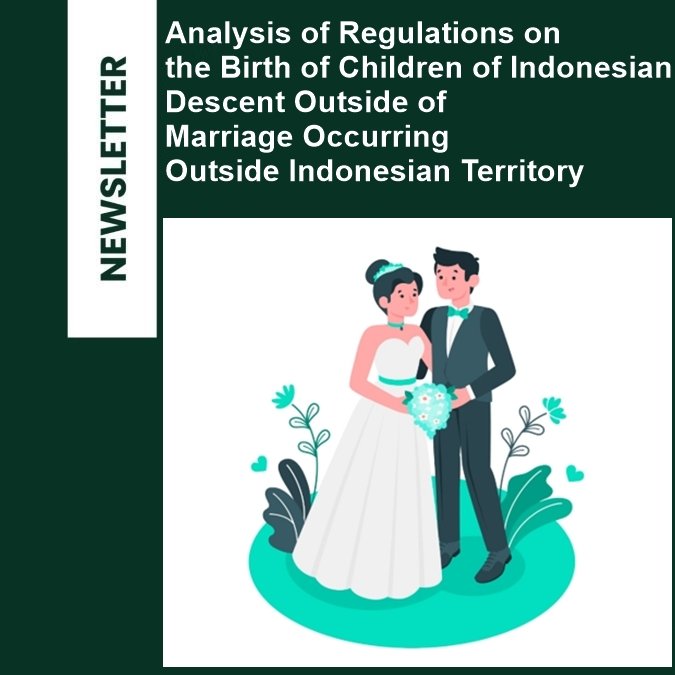
Analysis of Regulations on the Birth of Children of Indonesian Descent Outside of Marriage Occurring Outside Indonesian Territory

Image Source : https://www.freepik.com/free-vector/wedding-concept-illustration_7171680.htm#query=marriage&position=29&from_view=search&track=sph&uuid=80302d1d-1c38-4c2d-9c47-fba7fafd3183 From: A.M Oktarina Counsellors at Law Contributors: Pramudya Yudhatama, S.H., Khaifa Muna Noer Uh’Dina, S.H., Raysha Alfira, S.H. Reviewer: Noverizky Tri Putra Pasaribu, S.H., L.L.M (Adv). Ricki Rachmad Aulia Nasution, S.H. A. Background Marriage is an important and sacred event for all citizens. This is because through marriage, an individual will cause a relationship bound by rights and obligations to the marriage. Of course, as the purpose of marriage, it will produce descendants. Today, however, there are several status classifications of these “descendants”, or in general they can be referred to as children. For the status of children themselves, there is a classification, namely legitimate children born from marriages that are religiously recognized and legally valid, and children born outside marriage religiously and legally. Seeing the increasingly dynamic development, of course this in practice can happen to an Indonesian Citizen (“WNI”) and Foreign Citizen (“WNA”), who can become a child born out of wedlock and born outside the territory of Indonesia. On this matter, the next question becomes, what is the legal certainty and citizenship for the child? B. Legal Basis 1. Law Number 1 of 1974 concerning Marriage j.o Law Number 16 of 2019 concerning Amendments to Law Number 1 of 1974 concerning Marriage. (“Law No.16/2019”) 2. Law Number 35 of 2014 concerning Amendments to Law Number 23 of 2002 concerning Child Protection jo. Law Number 1 of 2023 concerning the Criminal Code. (“Law No. 35/2014”) 3. Law Number 12 of 2006 concerning Indonesian Citizenship. (“Law No. 12/2006”) 4. Law Number 23 of 2006 concerning Population Administration jo. Law Number 24 of 2013 concerning Amendments to Law Number 23 of 2006 concerning Population Administration. (“Law No.23/2006”) 5. Government Regulation Number 40 of 2023 concerning the Fourth Amendment to Government Regulation Number 31 of 2013 concerning Implementing Regulations of Law Number 6 of 2011 concerning Immigration. (“Government Regulation No.40/2023”). 6. Decision of the Constitutional Court of the Republic of Indonesia Number 46/PUU-VIII/2010 (“Constitutional Court Decision No.46/2010”). In principle, the birth of a child in a marriage is an inseparable part of human survival to continue the descendants produced by legal or unmarried couples. We can see by definition in Article 42 and Article 43 paragraph (1) of Law No.1/1974 explains that: Article 42 of Law No.1/1974: “A legitimate child is a child born in or as a result of a legal marriage.” Article 43 paragraph (1) of Law No.1/1974 jo Constitutional Court Decision No.46/2010: “A child born out of wedlock has a civil relationship with his mother and his mother’s family and with a man as his father which can be proven based on science and technology and/or other evidence according to law to have a blood relationship, including a civil relationship with his father’s family” Based on the two provisions above, it should be noted, that the civil relationship of children outside marriage, only to their mothers. But what if we look at the context from the citizenship side? Furthermore, before looking at the citizenship aspect, it is necessary to know that for children’s rights first, we can refer to the provisions of Article 1 paragraph 12 of Law No. 35/2014, which states that: “Children’s rights are part of human rights that must be guaranteed, protected, and fulfilled by parents, families, communities, states, governments, and local governments.”. Every child as an individual has human rights that must be guaranteed and recognized, so that with the differences in the status of children previously described, there will be no distinction between the rights of a child. Basically, children born outside the legal marriage of WNI and WNA couples, then the child is an WNI because there are provisions in citizenship regulations. This has been strengthened by the provisions in Article 4 letter h, and Article 5 paragraph (1) of Law No.12/2006 which states: Article 4 letter h of Law No.12/2006: “A child born out of legal wedlock to a Foreign Citizen mother who is recognized by an Indonesian father as his child and the recognition is made before the child turns 18 (eighteen) years old or unmarried;” Article 5 paragraph (1) of Law No.12/2006 “Children of Indonesian citizens born outside of legal marriage, not yet 18 (eighteen) years old and unmarried legally recognized by their foreign fathers are still recognized as Indonesian citizens.” Looking at the provisions above, it can be seen that children born outside marriage between WNI and WNA, either by lineage through father, or mother are still recognized as WNI. After knowing his citizenship status, the next step is administrative registration related to the child’s documents. That every child born outside the territory of Indonesia must be registered by the Indonesian representative and reported to the local civil registry agency. Even though the child was born outside the territory of Indonesia, the child born still receives the same registration treatment in administrative matters, as explained in Article 29 of Law No.23/2006 which reads: (1) “The birth of an Indonesian citizen outside the territory of the Republic of Indonesia must be recorded at the competent agency in the local country and reported to the Representative of the Republic of Indonesia. (2) If the local country as referred to in paragraph (1) does not provide birth registration for foreigners, the registration shall be carried out at the local Representative of the Republic of Indonesia. (3) The Representative of the Republic of Indonesia as referred to in paragraph (2) records the event of birth in the Birth Certificate Register and issues a Birth Certificate Citation. (4) Birth Registration as referred to in paragraph (1) and paragraph (2) shall be reported to the Implementing Agency no later than 30 (thirty) days after the Indonesian citizen concerned returns to Indonesia” As required by regulations, later after the child turns 18 (eighteen) years old, the child must choose his nationality. This is in accordance with Article 6 paragraph 1 of Law No. 12/2006. This must be done considering that Indonesia does not recognize the concept of dual citizenship in

Analysis of Regulations on the Birth of Children of Indonesian Descent Outside of Marriage Occurring Outside Indonesian Territory Read More »

Regulatory Analysis of the Position of Supreme Court Legal Products in the Hierarchy of Laws and Regulations

Image Source: https://www.freepik.com/free-vector/judges-court-hearing-illustration-courtroom-interior-background_3264805.htm#fromView=search&page=2&position=2&uuid=65cb1fa8-87a9-4d87-b5e2-7a40dd13cb5c   From: A.M Oktarina Counsellors at Law Contributors: Ethania Surinitulo Duha, S.H., Pramudya Yudhatama, S.H., C.L.A. Reviewer: Noverizky Tri Putra Pasaribu, S.H., L.L.M (Adv).   Background The Supreme Court (“MA”) is an institution that functions and is authorized as a judicial institution. This means that the Supreme Court has independent power as an actor of judicial power to uphold law and justice in Indonesia through the administration of justice. However, there are often circumstances in which the Supreme Court must regulate several things. Thus, the authority of the Supreme Court is not limited only to its function as a judicial institution because the Supreme Court also has the authority to make regulations. Therefore, the Supreme Court is also given the authority to regulate which can be seen in the legal products issued by it. So, what is the position of Supreme Court legal products in the hierarchy of laws and regulations? Then, do the Supreme Court legal products have legal force?   Legal Base Constitution of 1945; (“1945 Constitution“) Law Number 14 of 1985 concerning the Supreme Court Law Number 5 of 2004 concerning Amendments to Law Number 14 of 1985 concerning the Supreme Court jo. Law Number 3 of 2009 concerning the Second Amendment to Law Number 14 of 1985 concerning the Supreme Court; (“Law No.14/1985“) Law Number 12 of 2011 concerning the Establishment of Laws and Regulations Law Number 15 of 2019 concerning Amendments to Law Number 12 of 2011 concerning the Establishment of Laws and Regulations jo. Law Number 13 of 2022 concerning the Second Amendment to Law Number 12 of 2011 concerning the Establishment of Laws and Regulations. (“Law No.12/2011“)     In carrying out its duties and functions, the Supreme Court is given the authority to adjudicate at the cassation level, examine laws and regulations, and other authorities granted by law as stated in Article 24A paragraph (1) of the 1945 Constitution that:   Article 24A paragraph (1) of the 1945 Constitution:   “The Supreme Court has the authority to adjudicate at the cassation level, examine laws and regulations under the law against the law, and has other powers granted by law.”   The other authority of the Supreme Court includes one of the regulatory authorities. However, the Supreme Court can only issue regulations as a supplement when there are legal deficiencies or vacancies in a matter even though these matters have not been adequately regulated in Law Number 14 of 1985 concerning the Supreme Court. In addition, the regulations issued by the Supreme Court are also distinguished from regulations prepared by the framer of the Law and will not interfere and exceed the regulation on the rights and obligations of citizens in general and also do not regulate the nature, strength, means of proof and assessment as well as the distribution of the burden of proof as explained in Article 79 of Law No.14/1985  and Explanation of Article 79 of Law No.14/1985  that:   Article 79 of Law No.14/1985:   “The Supreme Court may further regulate matters necessary for the smooth administration of justice if there are matters that have not been adequately regulated in this Law.”   Explanation of Article 79 of Law No.14/1985:   “If in the course of justice there is a lack or vacuum of law in a matter, the Supreme Court has the authority to make regulations as a supplement to fill the deficiency or vacancy. With this Law, the Supreme Court has the authority to determine arrangements on how to resolve a problem that has not been or is not regulated in this Law. In this case, the regulations issued by the Supreme Court are distinguished by the regulations prepared by the framer of the Law. The administration of justice contemplated by this Act is only part of the procedural law as a whole. Thus the Supreme Court will not interfere with and exceed the regulation of the rights and duties of citizens in general nor will it regulate the nature, power, means of proof and judgment or the sharing of the burden of proof.”   That way, the Supreme Court can be said to have the authority to issue legal products. Then, what legal products can be issued by the Supreme Court? There are 4 types of legal products that can be issued by the Supreme Court which include: Supreme Court Rules (“PERMA”) Supreme Court Circular (“SEMA”); Supreme Court Fatwa; and Decree of the Head Justice of the Supreme Court;   Then, what is the position of the Supreme Court legal product in the hierarchy of laws and regulations? To answer this question, it is necessary to know in advance what is included in the hierarchy of laws and regulations consisting of 7 types of regulations as explained in Article 7 paragraph (1) of Law No.12/2011 that:   Article 7 paragraph (1) of Law No.12/2011:   “The types and hierarchy of laws and regulations consist of: Constitution of the Republic of Indonesia Year 1945; Decrees of the People’s Consultative Assembly; Government Laws/Regulations in Lieu of Law; Government Regulations; Presidential Regulation; Provincial Local Regulations; and District/City Regulations.”   For the legal products issued by the Supreme Court, their existence is recognized and has binding legal force to the extent ordered by higher laws and regulations or their formation based on the authority as explained in Article 8 paragraph (1) and paragraph (2) of Law No.12/2011 that:   Article 8 paragraph (1) of Law No.12/2011:   “Types of laws and regulations other than those referred to in Article 7 paragraph (1) include regulations stipulated by the People’s Consultative Assembly, House of Representatives, Regional Representative Council, Supreme Court, Constitutional Court, Audit Board, Judicial Commission, Bank Indonesia, Ministers, agencies, institutions, or commissions at the same level established by Law or the Government by order of the Law, Provincial People’s Representative Council,  Governor, Regency/City People’s Representative Council, Regent/Mayor, Village Head or equivalent.”   Article 8 paragraph (2) of Law No.12/2011:   “Laws and regulations as referred to in

Regulatory Analysis of the Position of Supreme Court Legal Products in the Hierarchy of Laws and Regulations Read More »

Get to Know More about Moral Rights and Economic Matters in Intellectual Property

Image Source : https://www.freepik.com/free-vector/education-easy-learning-set-icons_5152558.htm#fromView=search&page=1&position=0&uuid=09ec3e09-3c03-4e8d-81e6-8c494933448f   From: A.M Oktarina Counsellors at Law Contributors: Poppy Putri Hidayani, S.H., L.L.M., Ricky Rahmad Aulia Nasution, S.H., Reviewer: Noverizky Tri Putra Pasaribu, S.H., L.L.M (Adv).       Background Intellectual Property is property derived from human Intellectual capacity. For example, works of Literature, Science, Knowledge, Technology, and Art and Brand are works derived from Human Intellectual skills.   Human intelligence is clearly visible in these works because it requires a lot of time, effort, energy, thought, imagination, taste, and energy. So that this Intellectual Property raises several rights including Economic Rights and Moral Rights. The owner of the rights in the creative work owns the copyright, It consists of two main rights namely economic rights and moral rights.  Economic rights include the right to obtain financial benefits derived from copyright and other related rights. In contrast, moral rights include the right of authors to resist any deviation, mutilation, or other adjustment of their work that harms his honor or reputation. The concept of copyright originally came from the legal systems of civil law countries such as France and Germany which concentrated on individual copyrights, while common law countries such as the United States and the United Kingdom concentrated on copyright. This is stated in several studies that examine the economic concept and moral rights of creators according to the Civil Law and Common Law System.   Legal Base Constitution of 1945 (“1945 Constitution”) Law No. 28 of 2014 (Law No.28/2014) Law No. 14 of 2001 (Law No.14/2001) Law No. 15 of 2001 (Law No.15/2001) Law No. 19 of 2002 (Law No.19/2002)   Article 1 point 1 of Law No.28/2014 concerning Copyright, states that: “Copyright is the exclusive right of the creator that arises automatically based on the declarative principle after a work is realized in tangible form without prejudice to restrictions in accordance with the provisions of laws and regulations.” Moral rights, which are rights related to the honor and reputation of the creator, are an important part of copyright in many countries, including Indonesia. This is because moral rights are the embodiment of property rights.  A global consensus has been reached to regulate copyright taking into account the importance of moral rights.  This consensus covers a wide range of international treaties, including the Berne Convention. The term “moral droit” comes from French and has the same meaning as “moral rights”. The term was first used in France and later spread to other countries on the European continent. Quoting Article 5 paragraph 1 of Law No.28/2014  on copyright, “moral rights are exclusive rights owned by the creator forever and consist of: Keep his name on or without his name on the copy in connection with the Public Use of his Work, Using his alias or pseudonym, Changing His Creation in accordance with the propriety in Society Change the title and child titles of a Work Retain its rights in the event of distortion of the Work, mutilation of the Work, modification of the Work, or anything of a nature detrimental to its self-honor or reputation. Article 6 –Article 7 of Law No.28/2014 states “to protect moral rights” When the Creator is alive, his moral rights cannot be transferred, however, after his death, his rights can be exercised for other reasons or on the basis of a will, in accordance with applicable laws and regulations.  To protect moral rights, the law stipulates that creators have certain rights.   As referred to in Article 5 paragraph 1 of Law No.28/2014, the Creator may have: Copyright management information includes information about methods or systems that can identify the originality of the substance of the Work and its Creator; and information codes and access odes. Copyright electronic information includes information about a Work, which appears and is attached electronically in connection with the Work Announcement activity, the name of the creator, his alias or pseudonym, the Creator as the Copyright Holder, the period and conditions of use of the Work, the number, and information code.   As for Marks, what is meant by marks in (Law No.15/2001)  is a mark in the form of images, names, words, letters, numbers, color arrangements, or combinations of these elements that have distinguishing power and are used in trading activities for goods or services.   Economic rights held by the Creator under the Indonesian Copyright Law are divided into two categories, namely the Right to Publish and the Right to Reproduce the Creation. The first right includes Economic Rights in Law No.28/2014 concerning Copyright, regulated in Article 9 paragraph 1 of Law No.28/2014, which states that:   Economic Rights for Creators or Copyright Holders consist of: Publishing Works The Multiplication of Creation in all its forms Translation of Creation Adapting, arranging, or transforming the Creation Distribution of Works Creation Show Creation Announcement Creation Communication Creation Rental   In addition, authorization from the Creator or Copyright Holder is required for any person or party who wishes to exercise such economic rights. Based on the Copyright Law, economic rights are valid during the life of the creator and for 70 years after his death, in contrast to Patent Rights as explained in (Law No.14/2001) that: “The patent is granted for a period of twenty years from the Date of Receipt and that period cannot be extended”   This economic right includes the right to reproduce, announce, distribute, rent, lend, and commercially exploit copyrighted works.  Economic rights apply to the creator, but can also be granted to legal entities for a period of 50 years from the time the copyrighted work is published. Articles 23-28 of Law No.28/2014 regulate subjects that acquire economic rights, such as artists, record producers, writers and broadcasters.   As a case in point, Farah Quinn, a celebrity and presenter, sued an online shopping site for using photos of her for commercial purposes without her consent. At a news conference, Farah, who came with his legal team, said the case began when a friend contacted him and confirmed that his photo was

Get to Know More about Moral Rights and Economic Matters in Intellectual Property Read More »

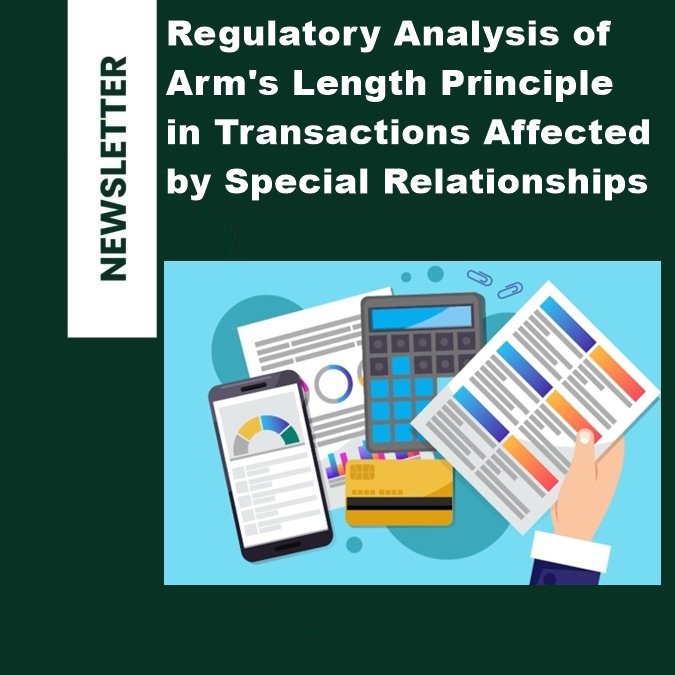
Regulatory Analysis of Arm’s Length Principle in Transactions Affected by Special Relationships

Image Source: https://www.freepik.com/free-vector/hand-drawn-credit-assessment-concept_20289181.htm#fromView=search&page=1&position=36&uuid=8ba850a8-ee57-4c96-93e0-b3c7ffaa7a49   From: A.M Oktarina Counsellors at Law Contributors: Ethania Surinitulo Duha, S.H., Pramudya Yudhatama, S.H., C.L.A. Reviewer: Noverizky Tri Putra Pasaribu, S.H., L.L.M (Adv).   Background A business activity must be inseparable from the transaction, both with parties who have a special relationship and with parties who do not have a special relationship. Often entrepreneurs look for loopholes to be able to manipulate prices far from reasonable limits. Due to the prevalence of these events, the Directorate General of Taxes of Indonesia issued regulations as a preventive measure to reduce or even eliminate these acts of price manipulation. Entrepreneurs in their capacity as taxpayers also have an obligation to comply with existing tax regulations. One way to counter such price manipulation is to establish the Arm’s Length Principle (“ALP“). Basically, ALP applies when there is a transaction that is affected by a special relationship. However, what is this special relationship meant by? And what kind of transactions require ALP?   Legal Basis Government Regulation Number 55 of 2022 concerning Adjustment of Arrangements in the Field of Income Tax; (“PP No.55/2022“) Regulation of the Ministry of Finance of the Republic of Indonesia Directorate General of Taxes Regulation of the Director General of Taxes No. Per-32/PJ/2011 concerning Amendments to the Regulation of the Director General of Taxes No. Per-42/PJ/2010 concerning the Application of the Principles of Fairness and Business Practices in Transactions between Taxpayers and Parties with Special Relationships; (“PMK No. Per-32/PJ/2011“) Regulation of the Minister of Finance of the Republic of Indonesia Number 172 of 2023 concerning the Application of the Principles of Fairness and Business Practices in Transactions Influenced by Special Relationships; (“PMK No.172/2023“)   ALP is a principle that regulates that if the conditions in the transaction carried out between the parties who have a special relationship are equal to or comparable to the conditions in the transaction carried out between the parties who do not have a special relationship, the price or profit in the transaction carried out between the parties who have a special relationship must be within the price or profit range in the transaction carried out between the parties who do not have a special relationship as a comparison as explained in Article 1 number 5 of PMK No. Per-32/PJ/2011 that:   Article 1 number 5 of PMK No. Per-32/PJ/2011:   “The Arm’s length principle (ALP) is a principle that regulates that if the conditions in the transaction conducted between the parties who have a Special Relationship are the same or comparable to the conditions in the transaction carried out between the parties who do not have a Special Relationship that is comparable, then the price or profit in the transaction made between the parties who have a Special Relationship must be equal to or within the the price range or profit in transactions made between parties who do not have a Special Relationship that is a comparator.”   What kind of special relationship then that the parties have? A special relationship means that the parties are in a state of dependence or have attachments caused by ownership or participation of capital, control, or blood or family relationships that result in one party being able to control the other party or resulting in the other party not standing independently in carrying out business activities as explained in Article 33 paragraph (1) of Government Regulation No.55/2022 and Article 2 paragraph (2) of PMK No.172/2023 that:   Article 33 paragraph (1) of Government Regulation No.55/2022: “A special relationship as referred to in Article 32 paragraph (3) is a state of dependence or attachment of one party to another caused by: ownership or participation of capital; mastery; or blood or blood family relations, which results in one party being able to control the other or not standing independently in running a business or carrying out activities.”   Article 2 paragraph (2) PMK No.172/2023:   “A special relationship as referred to in paragraph (1) is a state of dependence or attachment of one party to another caused by: ownership or participation of capital; mastery; or claret or blood family relationship.”   Then what kind of transaction requires ALP? Transactions that require ALP are transactions that are affected by a special relationship as explained in Article 4 paragraph (6) of PMK No.172/2023 that:   Article 4 paragraph (6) PMK No.172/2023:   “Transactions Affected by Certain Special Relationships as referred to in paragraph (5) include: service transactions; transactions related to the use or right to use intangible property; financial transactions related to loans; other financial transactions; property transfer transactions; business restructuring; and cost contribution agreement.“   The purpose of the ALP is to determine a reasonable transfer price when there is a transaction that is affected by the existence of a special relationship and its application is carried out by comparing the conditions and indicators of transaction prices affected by the special relationship with the conditions and price indicators of the same or comparable independent transaction as explained in Article 3 paragraph (2) and paragraph (3) of PMK No.172/2023 that:   Article 3 paragraph (2) PMK No.172/2023:   “The principles of Fairness and Business Practices as referred to in paragraph (1) are applied to determine a reasonable Transfer Price.”   Article 3 paragraph (3) PMK No.172/2023:   “The principle of Fairness and Business Practices as referred to in paragraph (2) is applied by comparing the conditions and price indicators of Transactions Affected by Special Relationships with the conditions and price indicators of the same or comparable Independent Transactions.”   Therefore, it is necessary to know the stages of implementing ALP before making transactions that are affected by special relationships as explained in Article 4 paragraph (1) and paragraph (4) of PMK No.172/2023 that:   Article 4 paragraph (1) PMK No.172/2023:   “The application of the Principles of Fairness and Business Practices as referred to in Article 3 paragraph (3) must be carried out: based on the actual circumstances; at the time of the Transfer Pricing and/or at

Regulatory Analysis of Arm’s Length Principle in Transactions Affected by Special Relationships Read More »

A.M | Oktarina Counselor at Law is one of the law firms participating in the International Conference “The Future of ADR In Asia- The Collaborative Approach” at Sunway Hotel, Phnom Penh Cambodia

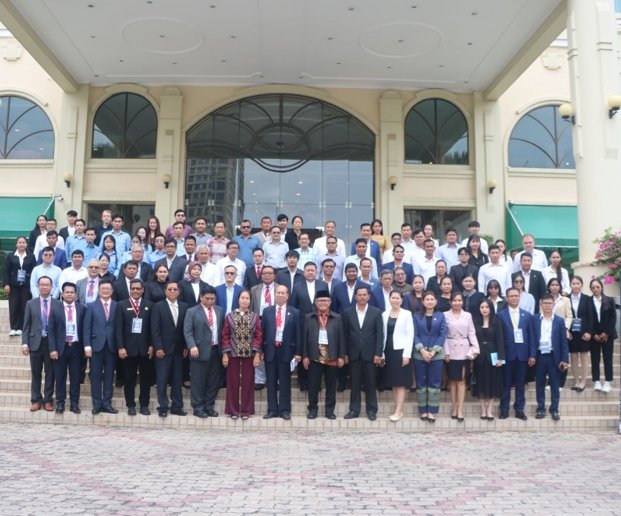
A.M | Oktarina Counselor at Law is one of the law firms participating in the International Conference “The Future of ADR In Asia- The Collaborative Approach” at Sunway Hotel, Phnom Penh Cambodia   International Conference “The Future of ADR In Asia- The Collaborative Approach” organized by the Collaboration between Indonesia Dispute Board (IDB) and Cambodian Centre for Mediation (CCM) on 15th May, 2024 at Sunway Hotel, Phnom Penh, Cambodia, attended by dispute resolution experts, Indonesian Supreme Court Judges, Lawyers, Businessmen, and Academics from ASEAN countries,  including Cambodia, Indonesia, Singapore, Vietnam, and Australia.  One of them who participated was Poppy Putri Hidayani, S.H., LL.M., CPM, Mediator who is also an Internship Associates at A.M | Oktarina Counselor at Law. The purpose of this international conference is to give a message to professional practitioners of dispute resolution outside the court to better understand the process as well. At the same time through this conference, the organizers want to convey a message to practitioners of out-of-court dispute resolution that in the current era, out-of-court disputes are not for resolving it’s not just for family disputes even the international community has now reached a stage where they can use out-of-court dispute resolution mechanisms to resolve international trade disputes or also cross-border disputs. President of the Indonesian Dispute Council (DSI) Prof. Sabela Gayo, S.H., M.H., Ph.D., said, “The Indonesian Dispute Council today has implemented a historic agenda of holding an International Conference on Alternative Dispute Resolution in Asia in the future with the theme Collaborative Approach,” The event is certainly not only a form of cooperation between the Indonesian Dispute Council (DSI) and the Cambodian Mediation Center (CCM), but there will also be more opportunities for Mediators from both countries to exchange knowledge and experience in carrying out their profession as Professional Mediators.   For more information, please contact: partner@amoktarina.net pasaribu@amoktarina.net 0817779122  

A.M | Oktarina Counselor at Law is one of the law firms participating in the International Conference “The Future of ADR In Asia- The Collaborative Approach” at Sunway Hotel, Phnom Penh Cambodia Read More »

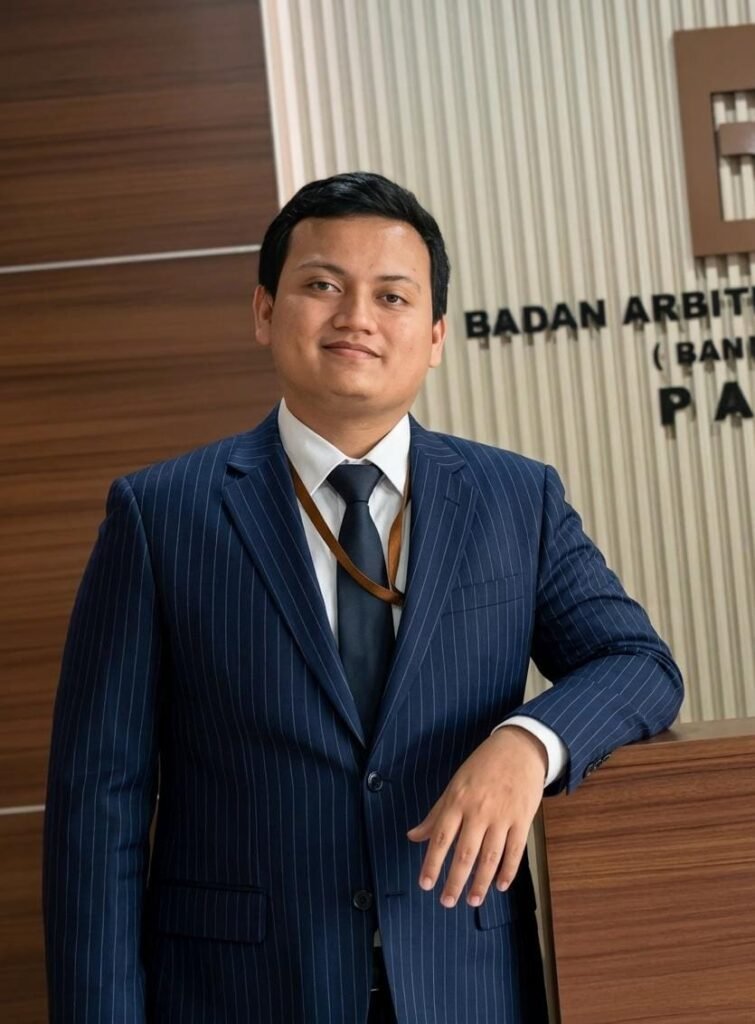
Aflah Abdurrahim,S.H.

​He holds a Bachelor of Laws (S.H.) from the Faculty of Law at Universitas Swadaya Gunung Jati (Unswagati) in Cirebon, West Java. His distinguished career is marked by numerous accolades, including recognitions from Asian Litigation and, most recently, an award from The World Bank. Currently, he serves as the Chief of Associates at a prominent law firm in Jakarta. Previously, he served as a key member of the Jakarta Regulatory Harmonization Committee. In these capacities, he consistently provides strategic legal counsel and formal legal opinions to a diverse clientele across all sectors of Commercial Law and Public-Private Partnerships (PPP). ​Strategic Government & Advisory Experience, he served as a Specialist Advisory Staff to the Governor of Jakarta’s Regulatory Harmonization Committee. His tenure was characterized by high-level expertise in navigating the intersection of public policy, private investment, and complex dispute resolution. His practice encompasses Civil and Criminal Litigation, including specialized proceedings (special crimes/fraud), with core responsibilities including: ​Legal Due Diligence: Conducting comprehensive legal audits for Regional Government-Owned Enterprises (BUMD) and Domestic Investment Companies (PMDN). ​Mergers & Acquisitions (M&A): Facilitating high-value transactions, including corporate acquisitions and complex G-to-G (Government-to-Government) investment schemes. ​Regulatory Drafting & Harmonization: Representing the Governor of Jakarta in the drafting of Regional Regulations (Peraturan Daerah) and overseeing the implementation of Cooperation Agreements (Perjanjian Kerja Sama) across various Indonesian government agencies. ​Antitrust & Competition Law: Providing strategic legal opinions and representation for major Indonesian telecommunications and WealthTech firms in proceedings before the Indonesia Competition Commission (KPPU). ​Professional Qualifications ​He is a licensed Advocate and a registered member of the Indonesian Advocates Association (PERADI). His profound expertise in Corporate Criminal Law and Corporate Restructuring makes him a formidable advisor for cross-border investments and legal strategies concerning corporate and individual fraud. He is widely recognized for his prowess in high-stakes negotiations and institutional policy development, backed by a significant portfolio of professional awards.

Aflah Abdurrahim,S.H. Read More »

Mr. Respati Achmad Ardianto S.H. M.Kn

Executive Partner Agrarian, Tax and Employment Law Expert   He holds his bachelor degree from University of Sebelas Maret. He continues to finish his master study at Gadjah Mada University specialized in Public Notary. He engaged in many Real Estate and Property law as well as employment and industrial issue and commercial dispute. He is able to provide the most extensive mediation process in and out of court settlement. Specialized in Commercial and Business Law, Company Law, Financial Law, Employment Law, Tax Law, Investment Law and Agrarian Law. In his recent case, he was succeed to assisted one of the most complex employment case concerning Good Corporate Governance implementation with PT Indo Tambangraya Megah Tbk. For further info you may contact him at email r.ardianto@amoktarina.net

Mr. Respati Achmad Ardianto S.H. M.Kn Read More »

Mr. Febrianda Pasaribu, Msc

Managing Partner Maritime and Shipping Consultant Specialist   He holds his bachelor degree from University of Pelita Harapan majoring Technic Industry. Afterwards he engaged with maritime and shipping industry for more than 15 years of experience. He is specialized on Maritime and Shipping Law, where he finished as well his master studies in Erasmus University in Rotterdam. In his last position, he was trusted to become one of the Deputy Director in one of the most reputable shipping company in Indonesia and Asia. Specialized in Commercial and Business Law, Company Law, Maritime and Shipping Law. Currently he assisted one of the biggest fuel supply transaction concerning 2 (two) major big companies respectively for the power plant establishment purposes. This project consist of more than Rp 60.000.000.000 (sixty billion Rupiah). For further info you may contact him at email f.pasaribu@amoktarina.net

Mr. Febrianda Pasaribu, Msc Read More »

Financing Liabilities in Mining Company Compliance

[vc_row][vc_column][vc_column_text]By: AMO Lawyers Contributors: Noverizky Tri Putra Pasaribu S.H LL.M (Adv)[/vc_column_text][vc_tta_tabs][vc_tta_section title=”English” tab_id=”1539672689117-39c88d08-c03e”][vc_column_text]In international business transaction, it is very common for entrepreneur to conduct the financing or loan transaction. This transaction generally is to support the entrepreneur business activity for certain sector such the construction development, company capital injection, contractor settlement payment, to secure the process of the facilities and infrastructure construction and etc. Accordingly, before the Bank may proceed with its approval for the entrepreneur financing or loan transaction, the Bank commonly proceed with its full compliance investigation covering Legal Due Diligence and Financial Due Diligence, where each of the corporate sector, license, government approval, capital current condition, debt and other loan, third party agreement, financial recapitulation, financial report and other elements shall be check very thoroughly. Specifically for the mining company, there is one specific factor that currently becomes a high level of concern or threat for the Bank related with its approval for the financing or loan transaction, respectively for the government approval to the mining company to proceed with its activity for the financing or loan transaction with the Bank. As you may aware, every entrepreneur who wishes to conduct its business in the mining sector shall require complying with the Law No 4 of 2009 concerning mineral and coal mining (“Mining Law”). At the beginning, the holder of IUP (Mining License) and IUPK (Special Mining License) shall have the obligation to conduct a report for its mining activity which regulated under Article 111 of the Mining Law, as follow “Mining Permit holders and Special Mining Permit holders must submit reports in writing periodically on activity plans and implementation of mineral and coal mining business activities to the Minister, governors, or regents/mayors within their authority”. The detail of this written report shall be governed under Government Regulation. One of the detail reference that being use for mining activity report is regulated under the Article of 101 to 105 of the Government Regulation No 23 of 2010 concerning the Implementation of the Mineral and Coal Mining Activity (“PP No 23/2010”) covering the written report for the Work and Budget Plan (Rencana Kerja dan Anggaran Biaya/”RKAB”) where Work and Budget plan shall include change of capital activity for the financing or loan transaction governed under the Ministry Regulation of Energy and Mineral Resources of Republic of Indonesia No 27 of 2013 concerning the Procedure and Determination of the Stock Divestment Price, and the Change of Capital Investment in the Mineral and Mining Coal Sector (“Permen No 27/2013”)    Under Article 15 Permen No 27/2013 stipulated that “the Change of Capital Investment only can be conducted after obtained the approval from the Ministry, Governor or Head of Region/Mayor as in accordance with its authority” and the Change of the Capital Investment shall include the following: the change of investment and financing resources; the change of the company status from Foreign Direct Investment Company (FDI) to the National Investment Company (PMDN) and vice versa; the amendment of Article of Associations; the change of the Director and Board of Commissioner; and the change of Shareholders ownership. For more detail, the regulation provided in the Article 16 of the Permen No 27/2013 stipulated that the request for the change of investment financial resources as provided before shall be conducted with the following required documents, as follow: a. Ground / reason for the change of investment and financial resources; b. Evidence of settlement for the Dead-rent for the IUP Exploration Holder, IUPK Exploration Holder, IUP Operation Production Holder, IUPK Operation Production Holder; c. Evidence of settlement for production dues consecutively for the period of the last 2 (two) years for the IUP Operation Production Holder and IUPK Operation Production Holder; d. Evidence of settlement for production dues for the IUP Exploration Holder and IUPK Exploration Holder that owned the temporary license to conducted the transporting and selling activity. And IUP Operation Production Holder specifically for processing and or refinement that harness the connatural mineral; e. Audited financial report for the last 2 (two) years by the Public Accountant; f. The Facility or Loan Agreement or Financing and credit Agreement; g. The Copy of IUP Exploration Certificate or IUPK Exploration Certificate or IUP Operation Production Certificate or IUPK Operation Production Certificate owned by the mining company registered at the General Directorate of Mining and Mineral Resources and has been declared clean and clear. Furthermore the issue is, that the legal infringement of this provision is not regulated under the Article 30 of Permen No 27/2013 concerning administration sanction. Although such sanction does not stipulated under the Permen No 27/2013, the obligation to obtain the approval from the Ministry, Governor or Head of Region/Mayor as in accordance with its authority for the change of the capital investment and financial resources shall keep binding the mining company. In practice, this issue has become a very imperative concern from the Bank, considering that to conduct the financing or loan transaction, every mining company must in the full compliance position (comply to all obligation under the prevailing law and regulation) except for other obligation that has yet to arise based on the prevailing law and regulation. Further in practice, the Bank shall request to the mining company to provide a security or guarantee in order for the Bank to have the legal immunity to proceed with its approval for the financing or loan transaction as regulated under the prevailing Indonesian Law. To understand its broader context, the mining company generally shall provide the following documents of security in the form of: Corporate guarantee and certificate; Director guarantee and certificate; Commissioner guarantee and certificate; Comfort Letter; etc.   The following security documents as abovementioned shall become the basis or ground of legal immunity for the Bank to provide the financing or loan transaction to the mining company as regulated under the prevailing law and regulation in Indonesia. Therefore, the security for such compliance can be conducted by the mining company and shall not be waived without exception as agreed

Financing Liabilities in Mining Company Compliance Read More »